
How We Turned 128,000 Impressions Into a $2,500 Sale in 90 Days

Most websites chase traffic.
But traffic alone doesn’t bring MONEY IN.
In this case study, we’ll show you exactly how 128,000 impressions turned into a confirmed $2,500 sale in just 90 days using our OVAS framework.
No ad spend. No dancing in front of the camera.
Have a website and want your visitor flow to produce actual revenue instead of vanity metrics?
Then this case study is for you.
And stay until the end if you want to see Google Search Console screenshots.
Let’s break down the system step by step.
TL;DR
Visitor Acquisition Assets published: 20
VAA Distribution: 20 posts + 254 comments
Timeframe: 90 days (365 days)
Main result: Lead reached out to us → $2,500 web design invoice.

The Starting Point
This case study started with a simple question:
Can a brand-new website generate a paying client through organic visitor acquisition alone?
To find out, the OVAS team launched a small experimental project built around a sprint coaching website.
Our founder had a background in competitive athletics, including two national titles in hurdles, which made sprint coaching a natural topic to build around.

The project started with no marketing budget.
The only costs were the bare minimum required to operate a website: a domain and a hosting plan that allowed it to be connected.
There was another limitation as well.
Unlike many coaches in the space, the project did not rely heavily on video-driven social media growth. That meant no influencer-style posting schedule and no dependence on Instagram reach.
Instead, the focus was placed entirely on building Visitor Acquisition Assets and distributing them strategically.
This created a clean testing environment.
No audience.
No paid traffic.
No shortcuts.
Just a set of web assets designed to attract attention organically.
The Results
To answer your question in advance - yes, we did get coaching inquiries, but we were actively turning them down.
This case study was not about delivering the high-quality personal coaching all athletes deserve... It was about acquiring a marketing client.
First, a small but active community formed around the site.
A Discord server grew to 140+ members, mostly young athletes between 14 and 18 years old, where advice, feedback, and encouragement were shared regularly. While community building wasn’t the primary objective, it became a natural extension of the content being published.
At the same time, the acquisition system itself was being built.
Over the course of the project:
20 Visitor Acquisition Assets (VAAs) were published
20 distribution posts were created and posted
254 meaningful comments were written across relevant discussions
One coach came across the site and reached out with a simple message:
“I want a website like this for myself.”
That conversation eventually turned into a $2,500 web design invoice.
Client's website: Hunchorunning.com
Which meant the experiment answered its original question.
A small set of structured assets, distributed consistently, was enough to generate a real inbound client without paid traffic, influencer posting, or an existing audience.
Not bad for twenty pieces of content and a pile of comments on the internet.
Visitor flow results are also nice.
Below you can see exactly where we stopped doing Reddit distribution.
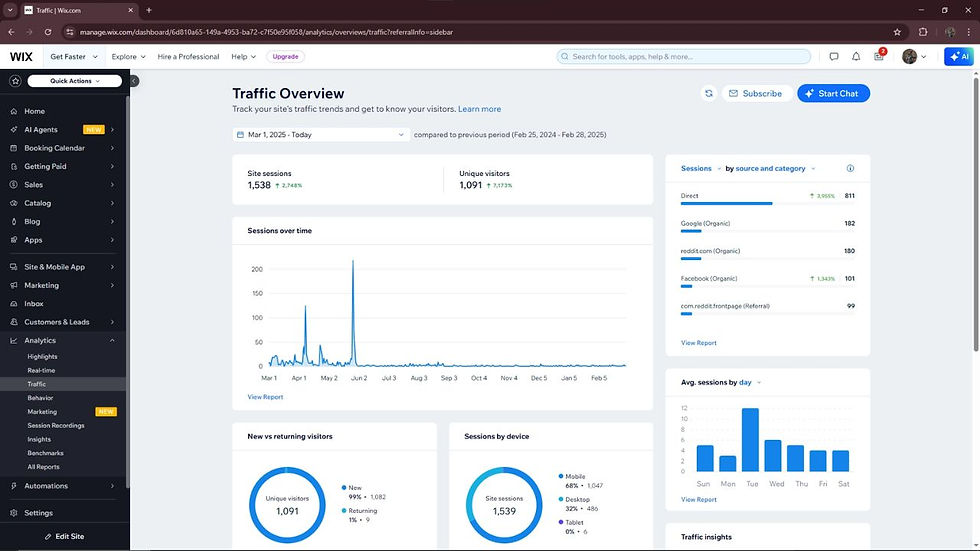
Organic search traffic is starting to pick up.
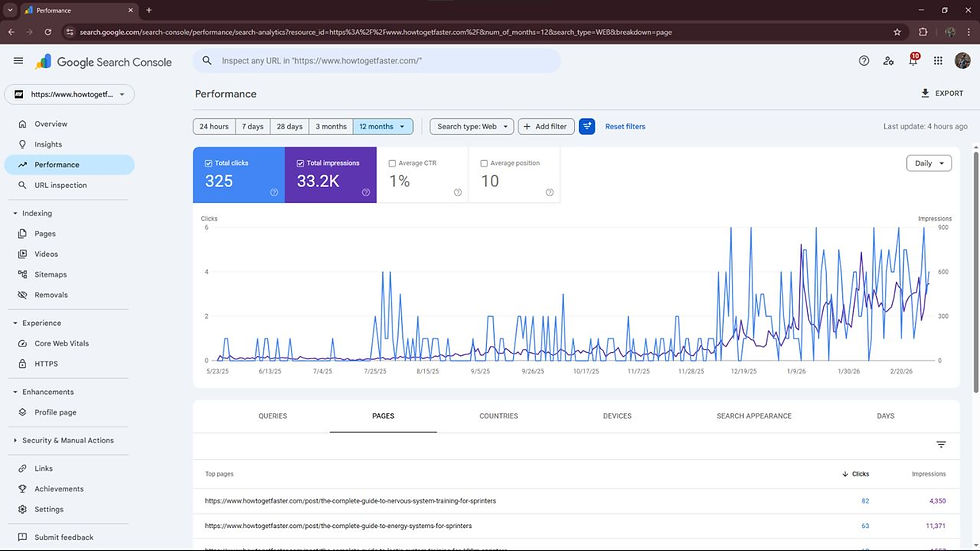
POV from Bing.

But they only matter if you understand how they happened.
So in the next section, we’ll break down the exact methods behind our success.
The Process
The results didn’t come from one lucky post.
They came from a system - that means you can do it as well.
(Or we can do it for you wink wink.)
Here’s exactly how it worked:
Step 1: Demand Mapping (Before the Domain Even Existed)
Before the domain was purchased, the first question was simple:
What are athletes actually searching for?
Several variations appeared repeatedly:
run faster
get faster
sprint faster
But those phrases weren’t interchangeable.
“Run faster” was often tied to distance running, while “sprint faster” reflected true speed training.

That distinction mattered.
After reviewing the demand and available domains, the project launched on:
(howtosprintfaster.com was not available.)
Search demand was only one piece of the puzzle.
The next step was understanding where these athletes actually spend time online.
Two platforms stood out immediately:
Reddit
Discord
Both are places where young athletes discuss training, share frustrations, and ask questions they wouldn’t normally ask a coach.
In fact, the Discord community that eventually formed around the project became one of the most valuable research tools.

With over 140 members, it allowed for direct conversations with athletes aged 14–18.
Those conversations revealed something that keyword tools never show:
hidden frustrations
real motivations
the obstacles athletes believe are holding them back
That insight became the foundation for many of the Visitor Acquisition Assets.
Step 2: Strategy (Building the Funnel Backwards)
Instead of starting with broad traffic content, the project followed a simple structure:
TOFU → MOFU → BOFU
But the production order was reversed.
It started at the bottom of the funnel.
One pillar at a time.

First came the assets that directly influence decisions:
short authority pieces
case studies
“The best” articles designed to convert
After that, the project moved upward.
Next came “The complete guide to” articles that answered specific training questions.
Only after that would the top-of-funnel content be created. These are the large-volume topics like:
“You’re doing this wrong”
common sprinting myths
broad training debates
These types of posts often generate huge search demand but limited depth.
Instead of trying to pack them with heavy instruction, the strategy was simple:
Let them capture attention and send readers deeper into the funnel where the real value lives.
Interestingly, the project produced results before the TOFU stage was even built.
Step 3: Structuring the Knowledge
The topic of sprint performance was broken down into three core pillars:
Training
Recovery
Support
This structure wasn’t based on search volume.
It was based on how athletes actually improve.
The information was grounded in research and coaching practice, including work such as:
Haugen, T., Seiler, S., Sandbakk, Ø. et al. (2019). The Training and Development of Elite Sprint Performance. https://doi.org/10.1186/s40798-019-0221-0
Each pillar was then expanded into specific topics.
Training
periodization
nervous system development
tendon adaptation
energy systems
Recovery
sleep
nutrition
stress reduction
Support
financial support
training environment
specialists and mentors
The philosophy was simple:
If an athlete improves these areas consistently, speed improvement becomes a byproduct of lifestyle design.
Step 4: Asset Production
Once the structure was clear, the production phase began.
The guiding rule was simple:
Write for the reader.
In this case, that reader was typically a 14–18 year old athlete trying to get faster.
Often for reasons that are very human:
securing a scholarship
performing better in competition
or simply impressing someone.
Because of that, the content followed a few strict rules:
every technical term explained
heavy use of bullet points
original images whenever possible
Generative AI was used only as a support tool.
It helped with brainstorming and rewriting sections, but every piece was manually reviewed and refined.
Nothing was published blindly.
Step 5: Asset Distribution
Publishing content is easy.
Getting people to see it is harder.

For this project, the primary distribution channel was Reddit.
But Reddit has one major rule:
It hates obvious promotion.
So the strategy wasn’t:
“Here’s our new article.”
Instead, posts were framed as conversations.
For example:
“I’ve been thinking about periodization in sprint training and organized my thoughts here. Curious if others see it the same way or approach it differently.”
This approach invited discussion instead of producing resistance.
The posts felt natural within the community rather than promotional.
Step 6: Leveraging Viral Formats
Another method involved studying high-performing posts in similar communities.
Some formats repeatedly generate large engagement.
For example, a popular post in r/gym asked:
“What’s the one fitness myth that refuses to die?”
The format was adapted for the sprinting niche:
“What’s the one sprint training myth that refuses to die?”

Same structure.
Different audience.
The post generated discussion immediately.
Sometimes the internet doesn’t need originality.
It just needs a proven format placed in the right community.
Step 7: Strategic Commenting
Finally, comments became an important distribution channel.
Two types of comments were used.
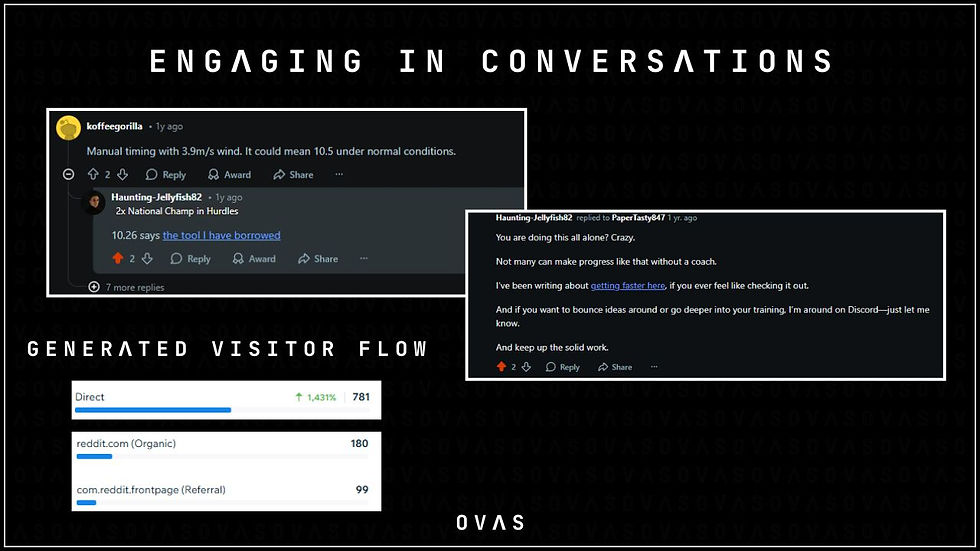
1. Problem-Solving Comments
When someone asked a question that had already been covered in an article, a helpful explanation was provided along with a link to the full resource.
2. Conversation Comments
Under the project’s own posts, every reply was answered thoughtfully.
No automation.
No scripted responses.
Just genuine participation in the discussion.
Over time, this created trust within the communities.
And that trust eventually translated into 128,000 Reddit impressions and a paying client.
Key Takeaways
This project started as a simple experiment.
A brand-new website was launched with no audience, no ad spend, and minimal upfront cost.
Within 90 days, the system produced measurable outcomes:
20 Visitor Acquisition Assets published
20 distribution posts and 254 comments
128,000 Reddit impressions
A Discord community of 140+ athletes
One inbound request that became a $2,500 web design invoice
Standard Methods Used in this Case Study
demand mapping
asset production
strategic interlinking
Additional Growth Measures for Clients with
The 300% ROI Guarantee
These measures could be applied for OVAS™ systems with 10+ VAAs per month to fulfill the 300% ROI guarantee:
Social media distribution
Strategic commenting
Link-building activities
Re-structuring underperforming VAAs
Re-indexing and resubmitting updated content
Identifying and consolidating cannibalizing content
Adding trust elements (proof, testimonials, data points)
Creating content designed to trigger bookmarks and returns
Reverse-engineering competitors’ best-performing pages and out-positioning them
The list goes on and on...
Simply put: methods we determine to be essential in order to deliver on our promises.
In other words, howtogetfaster wasn’t a random experiment. It was our way of showing you how we get things done.
The Bigger Picture
Those 20 assets are still live.
They are just now on the rise to attract visitors from Google and Bing (months after publication.)
Which means the system doesn’t reset every month like paid ads do.
Once the assets exist, they keep working.
And the next assets simply stack on top of the previous ones.
What a time to be alive!
Want Something Similar?
If you’re interested in building a similar organic visitor acquisition system for your website, go ahead:
Share your thoughts in the comments
Schedule a call with the OVAS team to explore what the system could look like for your business
Because on the internet, profit rarely appears by accident.
It’s usually engineered.
Shared a before and after photo I had with a project with a link. Only a few clicks came in, but it made me feel like my work isn’t invisible.
Question: What’s the boldest thing you’ve ever done to get your content noticed?
Share your story here!